
300 Hour Yoga Teacher Training in Rishikesh: Moving Beyond the Practice Into Mastery
Yoga is an evolving journey where physical discipline meets deeper awareness. Advanced training creates opportunities to refine teaching abilities, explore philosophy, and develop a more meaningful connection with yoga.
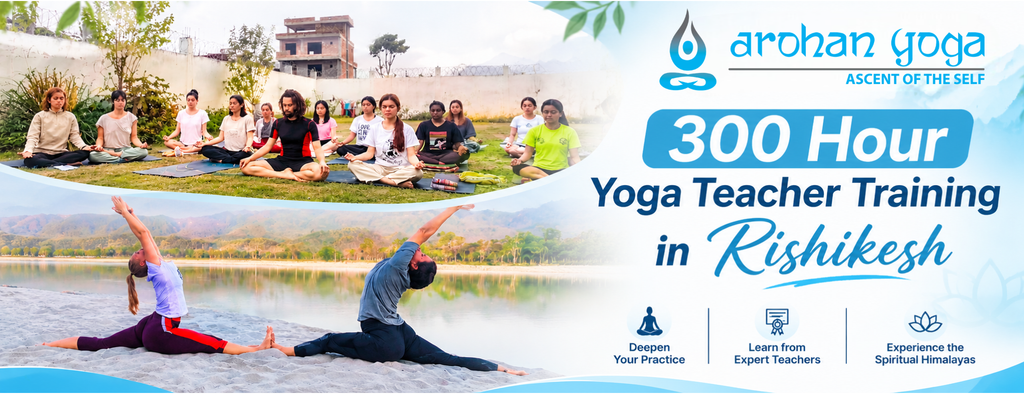
The 300 hour yoga teacher training in Rishikesh offers an opportunity for certified yoga teachers to advance their knowledge beyond foundational instruction. It encourages practitioners to explore advanced asanas, refine alignment techniques, understand yogic philosophy, and develop a teaching approach rooted in awareness rather than repetition.
Unlike introductory courses, advanced yoga education focuses on the relationship between knowledge, experience, and the ability to guide others. This blog explores how advanced training transforms teaching perspectives, strengthens practical expertise, and introduces new dimensions of personal growth.
When Familiar Postures Begin Asking Deeper Questions Again
At an advanced level, yoga becomes less about achieving a particular posture and more about understanding the mechanics, intention, and awareness behind every movement. Teachers begin examining how alignment influences stability, how breathing supports transitions, and how individual anatomical differences affect the experience of an asana. This shift encourages a more thoughtful approach to both personal practice and classroom instruction.
A deeper learning experience also requires revisiting familiar techniques with a different perspective. Ashtanga Vinyasa introduces structured progressions, while Hatha develops attention to posture, balance, and controlled movement. Advanced sequences involving arm balances, inversions, and backbends can expand technical understanding when approached with appropriate preparation, modifications, and guidance.
The learning process extends beyond physical practice. Studying classical yoga texts, including the Yoga Sutras and Bhagavad Gita, introduces philosophical ideas that influence discipline, awareness, and everyday conduct. Rather than treating philosophy as theoretical knowledge, practitioners can explore how these principles translate into practical teaching decisions.
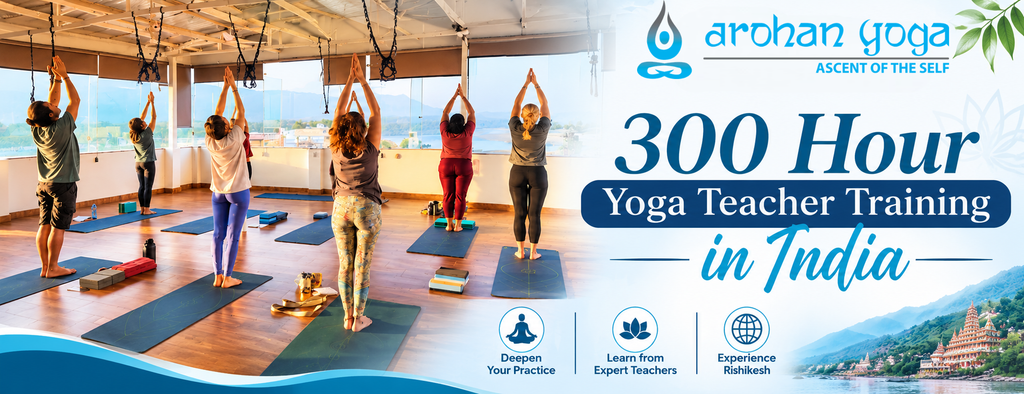
For those exploring a 300 hour yoga teacher training in India, this stage provides an opportunity to connect traditional yogic knowledge with contemporary teaching requirements.
The objective is not simply to accumulate more techniques but to understand why particular practices work, when modifications are appropriate, and how different students may experience the same instruction.
From Physical Precision To A More Complete Practice
Physical precision becomes meaningful when it is supported by an understanding of the entire body. Advanced yoga education therefore explores anatomy, biomechanics, muscular engagement, connective tissues, joint movements, and spinal mechanics. These subjects help instructors understand the relationship between posture and physical function rather than relying exclusively on visual alignment.
A well-developed understanding of anatomy also influences how teachers approach individual differences. Two students attempting the same posture may require entirely different modifications because of their mobility, experience, or physical limitations. Recognising these differences allows instructors to create more inclusive sessions without treating flexibility or advanced postures as measures of achievement.
Another important dimension is the relationship between movement and breath. Pranayama techniques such as Bhastrika, Bhramari, Ujjayi, and Nadi Shodhana introduce different approaches to breathing awareness. Meditation practices further develop concentration and encourage practitioners to observe their experiences without becoming distracted by external surroundings.
Ayurveda adds another perspective to this learning process. Its foundational concepts, including the three doshas, five elements, and seven dhatus, introduce traditional ways of understanding individual constitutions and lifestyle balance.
This combination of anatomy, breathwork, meditation, and traditional knowledge makes advanced learning more comprehensive. Teachers become better equipped to explain the purpose behind their instructions and develop sessions that consider different learning requirements.
Balancing Dynamic Energy With The Intelligence Of Stillness
Yoga is often associated with movement, strength, and flowing sequences, but stillness deserves equal attention. A balanced teaching approach recognises that dynamic practices and slower, restorative experiences contribute different dimensions to the learning process.
Ashtanga Vinyasa offers a structured approach to movement, combining breath with progressive sequences. Hatha encourages deliberate positioning and sustained attention, while Aerial Yoga introduces supported movements, balance, and spatial awareness. These different approaches help practitioners understand how yoga can be adapted beyond one established style.
Yin Yoga provides an important contrast. Its longer-held postures encourage patience and awareness of the body’s response to gentle, sustained stretches. Studying Yin principles alongside more dynamic methods helps instructors understand the distinction between muscular engagement and the effects of longer-held postures on connective tissues.
The relationship between these approaches also reflects the traditional Hatha philosophy. The concepts of Ha and Tha are commonly associated with solar and lunar qualities, representing complementary energies. Instead of viewing active and passive practices as competing methods, teachers can explore how they contribute to a balanced learning experience.
Aerial Yoga introduces another creative dimension through the use of suspended fabric. Students explore supported postures, controlled transitions, and different movement patterns. Understanding suitable sequencing, contraindications, and modifications becomes particularly important when preparing classes for participants with different experience levels.
Turning Personal Understanding Into Clear Confident Teaching Skills
Teaching methodology therefore becomes an essential part of advanced yoga education. Instructors explore how to organise classes, establish logical progressions, demonstrate movements, and communicate instructions without overwhelming participants. These skills help transform individual knowledge into an accessible learning experience.
Sequencing is particularly important because every class needs a clear direction. A carefully structured session can move from preparation to progressively demanding movements before transitioning towards relaxation. Teachers also learn to consider the purpose of each posture, the relationship between successive movements, and the needs of the intended participants.
Adjustments and modifications require equal consideration. Physical assistance should be approached with appropriate training, consent, and sensitivity to individual comfort. Verbal instructions and demonstrations can also provide effective alternatives when direct assistance is unnecessary.
Another important skill is understanding how to manage the atmosphere of a class. Voice modulation, body language, timing, and the arrangement of the yoga space influence how students receive instructions. These details may appear small, but together they contribute to a more organised and supportive environment.
A Daily Rhythm That Connects Study With Experience
A typical training schedule may combine early-morning Ashtanga Vinyasa, mantra chanting, pranayama, Hatha Yoga, philosophy, meditation, alignment studies, Aerial Yoga, and Yin Yoga. Dedicated study periods also provide time to explore anatomy, Ayurveda, teaching methodology, and the foundations of traditional yoga.
The wider learning experience can include several interconnected elements:
- Advanced asana practice: Explore progressive Hatha and Ashtanga sequences, including appropriate preparations for inversions, balances, and backbends.
- Breathing and meditation: Develop familiarity with different pranayama techniques, mantra practices, concentration, and meditation methods.
- Anatomy and biomechanics: Understand muscular systems, joints, connective tissues, spinal movement, and the relationship between anatomy and asana.
- Traditional knowledge: Study yoga philosophy, the eight limbs of yoga, Ayurveda, and classical approaches to personal discipline.
- Specialised yoga styles: Explore Yin and Aerial Yoga alongside dynamic practices to understand different teaching possibilities.
Location can also influence the overall learning experience. Rishikesh offers a distinctive setting where the Himalayan foothills, the Ganges, and established yoga traditions create an environment closely connected with Indian spiritual heritage.
Final Notes
Advanced yoga education represents a transition from practising familiar techniques to understanding the wider principles that make yoga meaningful. Through advanced asanas, anatomy, pranayama, meditation, philosophy, Ayurveda, and specialised styles, teachers can develop a more balanced understanding of their practice and instructional responsibilities.
The 300 hour yoga teacher training in Rishikesh provides an opportunity to explore these dimensions in an environment deeply connected with yoga’s traditional roots. For practitioners ready to take their learning further, Arohan Yoga offers a comprehensive programme combining Hatha, Ashtanga Vinyasa, Aerial, and Yin Yoga with philosophy, anatomy, and teaching methodology.
Explore Arohan Yoga’s 300-hour programme and take your next step towards becoming a more knowledgeable, confident, and thoughtful yoga teacher.
Frequently Asked Questions
Advanced training explores deeper aspects of yoga anatomy, philosophy, and teaching methodology. It introduces specialised practices and more complex sequencing techniques. It helps existing yoga teachers expand their knowledge and instructional abilities.
The programme is designed for practitioners who have completed foundational 200-hour yoga teacher training. It is suitable for teachers seeking more advanced knowledge of yoga practices and philosophy. It also supports the development of specialised teaching skills.
The programme covers Hatha, Ashtanga Vinyasa, Aerial, and Yin Yoga. Each style introduces different approaches to movement, alignment, and practice. Learning multiple styles helps teachers develop more versatile class structures.
Anatomy helps teachers understand muscles, joints, connective tissues, and movement patterns. Ayurveda introduces traditional perspectives on individual constitutions and lifestyle balance. Together, these subjects provide a broader understanding of yoga and wellbeing.
It develops skills in sequencing, demonstrations, verbal instructions, and class management. Teachers also explore alignment, modifications, and appropriate adjustments. Regular teaching practice and feedback help strengthen instructional confidence.