
Aerial Yoga Teacher Training: Elevate Your Practice into a Teaching Journey
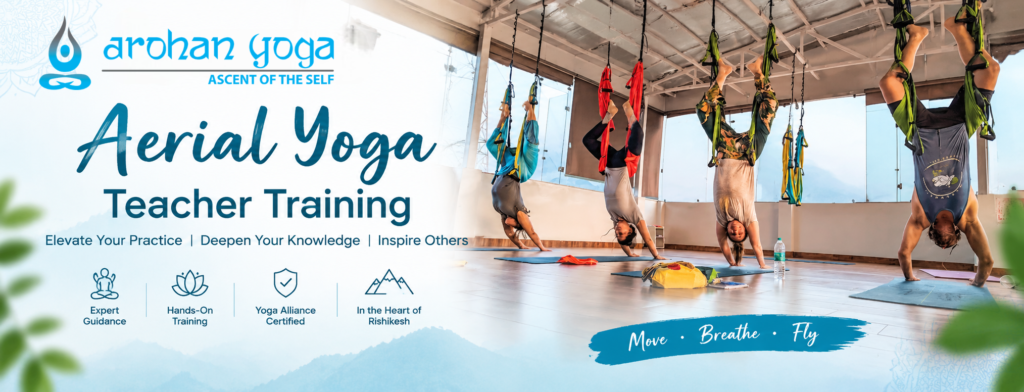
Aerial yoga brings movement, balance, and mindful breathing together through the support of a suspended fabric hammock. This distinctive practice encourages practitioners to explore familiar yoga postures from a fresh perspective while developing body awareness and coordination.
For those looking to expand their knowledge and guide others, aerial yoga teacher training offers a structured pathway to understanding aerial techniques, safe practice, and effective instruction. It combines practical learning with teaching methodology, helping aspiring instructors develop the skills needed to lead thoughtfully planned sessions.
This guide explores the foundations of aerial yoga, the essential skills taught during training, how to prepare for teaching, and what to consider when choosing a suitable programme in India.
Beyond the Mat: Discovering a New Dimension of Yoga
Traditional yoga often focuses on movements performed while standing, sitting, or lying on a mat. Aerial yoga introduces a fabric hammock that supports selected postures, assists with balance, and creates opportunities to explore movement in a different way. It combines elements of yoga with approaches influenced by movement training, Pilates, and flexibility practice.
The hammock is not simply an accessory for impressive poses. Under appropriate instruction, it can provide support during stretches, help practitioners explore modified positions, and introduce variations of familiar movements. Some postures involve partial suspension, while others use the fabric primarily for stability and alignment.
For people exploring aerial yoga India programmes, understanding this distinction is important. Aerial yoga is not merely about performing inversions or creating dramatic shapes in the air. It involves awareness of body positioning, controlled transitions, appropriate use of equipment, and respect for individual ability.
The practice can be adapted to different experience levels, but it is not automatically suitable for everyone or every condition. Instructors need to understand how to offer modifications, recognise when a movement should be avoided, and encourage participants to work within their comfort and ability.
A thoughtful introduction to aerial yoga therefore begins with curiosity and patience. By building familiarity with the hammock and learning foundational movements gradually, practitioners can develop a more informed appreciation of this distinctive approach to mindful movement.
Building the Foundations of Safe and Skilful Practice
Learning aerial yoga requires more than flexibility or confidence with elevated movements. Practitioners need to understand how the hammock supports the body, how to move between positions with control, and how to recognise the difference between a manageable challenge and an unsuitable movement.
A structured training programme introduces these fundamentals progressively. Students begin by familiarising themselves with the equipment and learning basic positions before advancing to more complex movements. They also explore warm-ups, core engagement, balancing postures, spinal extensions, and finishing sequences.
Safety remains central throughout the learning process. The hammock and its suspension system must be installed and inspected appropriately, with suitable clearance around the practice area. Instructors should understand equipment limitations, follow installation guidance, and avoid attempting movements beyond their training.
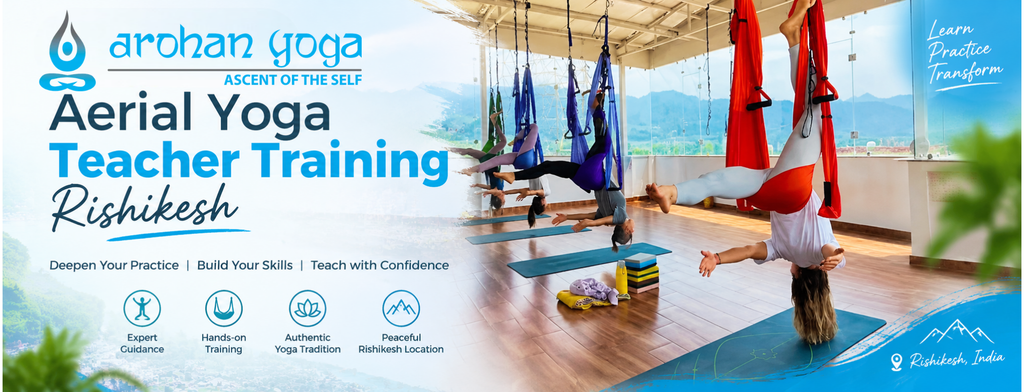
For anyone considering aerial yoga teacher training Rishikesh, the learning environment is another factor worth evaluating. A programme should provide supervised practice, clear demonstrations, opportunities to ask questions, and feedback from experienced teachers. Students should also have sufficient time to repeat techniques rather than rushing through a long list of poses.
Anatomical awareness adds another important dimension. Understanding basic joint movement, spinal positioning, balance, and muscular engagement helps future instructors explain techniques more clearly. It also supports better decision-making when adapting a posture for a student’s needs.
Developing these foundations takes patience and consistent practice. Rather than measuring progress by how quickly advanced poses can be performed, aspiring teachers should focus on control, technique, awareness, and the ability to explain each movement accurately.
From Personal Practice to Confident Instruction
Practising aerial yoga and teaching it are two different skills. A practitioner may become comfortable with a particular posture, but an instructor must understand how to demonstrate it, communicate the steps, observe students, and offer appropriate alternatives.
A well-rounded course therefore includes teaching methodology alongside physical practice. Students learn to organise movements into a logical sequence, introduce poses with clear instructions, and guide transitions without overwhelming participants. They also explore how class structure can change according to experience level, session objectives, and individual ability.
Daily teaching practice can be especially valuable. Explaining a movement to another student encourages trainees to think carefully about positioning, timing, and verbal cues. Feedback from teachers helps them identify unclear instructions, improve demonstrations, and build a more composed teaching presence.
Training should also address communication and professional responsibility. An instructor needs to explain equipment rules, establish class expectations, respect personal boundaries, and recognise when a participant may need to stop or seek appropriate guidance. Students should never feel pressured to attempt an unfamiliar or uncomfortable movement.
Aerial instruction is most effective when creativity is supported by sound fundamentals. A thoughtfully designed session balances movement, rest, transitions, and suitable modifications instead of focusing exclusively on visually impressive poses.
By connecting personal experience with teaching practice, trainees can begin to understand what makes an aerial yoga class organised, accessible, and engaging. The goal is not simply to perform movements successfully but to help others approach the practice with greater awareness and confidence.
Inside the Training Experience: Turning Concepts into Skills
A dedicated training programme allows students to study aerial yoga in a concentrated learning environment. Arohan Yoga’s published programme, for example, describes a seven-day, 50-hour course that combines posture training, safety instruction, anatomy, alignment, and supervised teaching practice.
When comparing an aerial yoga certification course India option, prospective students should examine the curriculum and the assessment process rather than relying on the course title alone. Important elements to look for include:
- Progressive posture learning: Training should introduce foundational movements before advancing to more demanding sequences.
- Anatomy and alignment: Students should learn basic movement principles and understand how positioning influences practice.
- Equipment safety: Instruction should cover suitable setup, equipment checks, movement precautions, and safe use of the hammock.
- Teaching opportunities: Supervised practice should allow trainees to demonstrate techniques, organise sequences, and receive constructive feedback.
- Assessment and evaluation: Attendance, practical demonstrations, and relevant theoretical assessments can help establish whether students have understood the material.
- Clear certification information: Applicants should confirm the awarding organisation, certificate requirements, and any applicable recognition or continuing-education conditions.
The learning environment also matters. Access to suitable practice space, well-maintained equipment, organised study materials, and attentive instruction can make intensive training more manageable.
Carrying the Learning Forward into a Meaningful Teaching Practice
New instructors benefit from starting with sessions that match their competence. Simple sequences, clear instructions, and carefully planned transitions provide a stronger foundation than introducing advanced movements too early. Continued mentorship and additional training can help teachers develop their approach as their experience grows.
Before beginning to teach, consider these practical priorities:
- Plan for the intended audience: Identify the experience level, objectives, and appropriate modifications for each class.
- Prepare the practice space: Check that the hammock system is properly installed, inspected, and suitable for the intended use.
- Develop clear lesson plans: Organise warm-ups, foundational postures, transitions, and relaxation into a coherent session.
- Prioritise participant wellbeing: Explain safety expectations and encourage students to stop if they experience discomfort or feel uncertain.
- Continue professional development: Seek feedback, revise teaching methods, and deepen your understanding of anatomy and movement.
- Communicate qualifications accurately: Represent your training and certification honestly, and check the requirements relevant to the studio or organisation where you intend to teach.
Building an effective teaching practice takes time. Each class provides opportunities to improve communication, refine sequencing, and understand how different people respond to instruction.
Final Thoughts
Aerial yoga offers a distinctive way to explore movement, balance, flexibility, and body awareness through the support of a hammock. A structured training programme can help aspiring instructors develop foundational techniques, understand safety and alignment, practise sequencing, and gain experience guiding others. Choosing the right course involves examining its curriculum, supervised teaching opportunities, assessment process, and certification details.
For those ready to explore this learning journey in Rishikesh, Arohan Yoga offers a dedicated aerial yoga training programme designed around practical learning and teaching preparation. Visit the Arohan Yoga’s aerial yoga programme to review the course details and enquire about the next available training dates.
Frequently Asked Questions
Aerial yoga teacher training typically covers hammock safety, foundational postures, alignment, anatomy, sequencing, and teaching practice. Arohan Yoga lists these learning areas in its 50-hour programme. Contact Arohan Yoga to confirm the current curriculum and assessment requirements.
Suitability depends on the course’s entry requirements and the participant’s physical needs and experience. Arohan Yoga describes progressive instruction from basic safety to more advanced postures. Ask Arohan Yoga whether your experience level meets the current programme requirements before enrolling.
Course duration varies by provider, programme structure, and training hours. Arohan Yoga advertises a seven-day, 50-hour aerial yoga teacher training programme. Contact Arohan Yoga to confirm upcoming dates, completion requirements, and certification details.
Look for qualified instruction, safe equipment, supervised teaching practice, and transparent certification information. Arohan Yoga publishes details about its curriculum, assessments, and training facilities. Compare these details with your learning goals before choosing a programme.
Training can help develop the foundational knowledge and practical skills needed to teach aerial yoga, although employment requirements vary. Arohan Yoga includes teaching practice and assessment in its advertised programme. Review Arohan Yoga’s certification details and any additional requirements relevant to your intended teaching role.