
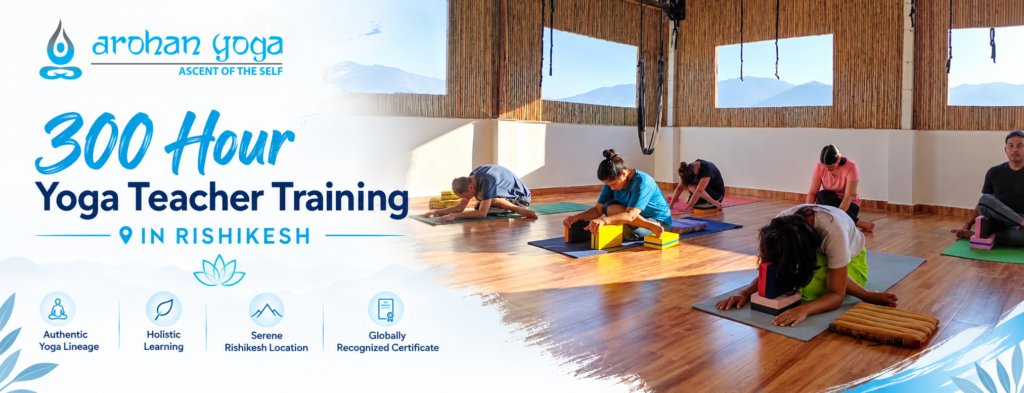
300 Hour Yoga Teacher Training in Rishikesh: Deepen Your Practice
Yoga can become a deeper journey when practice, philosophy, anatomy, and teaching skills come together through immersive learning and consistent self-exploration.
A 300 hour yoga teacher training in Rishikesh can help experienced practitioners move beyond foundational learning and explore yoga with greater depth, awareness, and teaching confidence. Unlike an introductory teacher-training programme, an advanced course can provide opportunities to understand complex asanas, sequencing, alignment, anatomy, pranayama, meditation, philosophy, and specialised approaches to teaching. The setting of Rishikesh can further encourage an immersive relationship with yogic traditions and disciplined daily practice.
This guide explores how advanced yoga education develops progressively, from strengthening personal practice to understanding specialised techniques and eventually applying knowledge through confident teaching.
Building Advanced Foundations Through Deeper Yoga Study
A 300-hour programme generally builds upon knowledge gained through foundational teacher training. Rather than simply introducing more postures, advanced education can encourage students to understand why particular practices are performed and how they can be adapted for different practitioners.
The curriculum may bring together physical practice, theoretical learning, observation, teaching practice, and self-study. This creates a learning journey in which different subjects support one another rather than functioning as isolated modules.
- Advanced asana exploration: Students can study more challenging postures, including inversions, arm balances, backbends, and progressive variations, while learning appropriate preparation and modifications.
- Stronger anatomical understanding: Anatomy and biomechanics can help practitioners understand movement, joints, muscles, connective tissues, and the relationship between physical structure and yoga practice.
- Philosophical depth: Classical yoga philosophy can be explored through concepts, texts, traditions, and principles that connect practice with broader aspects of yogic living.
- Breath and meditation: Advanced pranayama and meditation practices can encourage greater awareness of breath, attention, concentration, and internal observation.
- Personal development: Consistent practice can help students identify areas requiring refinement while developing greater discipline and self-awareness.
This deeper foundation naturally leads to another important aspect of advanced training: learning how different yoga traditions can complement one another.
Exploring Diverse Yoga Styles Through Integrated Practice
Advanced training can become more meaningful when students experience different approaches instead of limiting themselves to one style. A multidimensional curriculum may introduce practices that challenge the body, calm the nervous system, develop mobility, and cultivate awareness.
The balance between active and restorative practices is particularly valuable. Dynamic approaches can develop strength, endurance, coordination, and focus, while slower practices can encourage mobility, introspection, and relaxation.
- Hatha Yoga: Provides an opportunity to refine alignment, stability, breathing, and mindful movement through classical postures and structured sequences.
- Ashtanga Vinyasa: Develops a more dynamic relationship between breath and movement while introducing systematic sequences and progressively challenging practices.
- Yin Yoga: Offers a slower approach that focuses on sustained postures, deeper awareness, and the relationship between tissues, joints, and mobility.
- Aerial Yoga: Introduces suspended movement, balance, spinal extension, and creative ways of approaching familiar principles of yoga.
- Ayurveda and cleansing practices: An introduction to Ayurvedic principles and traditional cleansing approaches can broaden understanding of lifestyle and yogic wellbeing.
The combination of these disciplines can give learners a broader perspective, but knowing the practices is only part of becoming an effective teacher. The next stage involves learning how to communicate and structure them.
Turning Personal Practice into Confident Teaching Skills
Knowing how to perform an asana does not automatically mean knowing how to teach it. Advanced teacher training therefore places importance on communication, observation, sequencing, demonstration, and appropriate modifications.
Students can gradually shift from being practitioners to becoming facilitators who understand how to create a safe, purposeful, and engaging class for different levels of experience.
- Class sequencing: Students can learn how postures, transitions, warm-ups, peak poses, and closing practices can be arranged into coherent sessions.
- Demonstration skills: Clear demonstrations can help teachers communicate physical movements more effectively while supporting visual learning.
- Verbal instruction: Teachers can develop concise instructions that explain movement, breathing, alignment, and engagement without overwhelming students.
- Observation and adjustment: Learning how to observe posture and offer appropriate adjustments or modifications can improve the quality of instruction.
- Injury prevention: Understanding contraindications, limitations, and safer alternatives can help teachers make classes more responsible and adaptable.
- Teaching practice: Regular opportunities to practise teaching can build confidence while helping students identify areas that require improvement.
Once these skills develop, advanced yoga education becomes less about collecting techniques and more about learning how to make informed decisions for different practitioners.
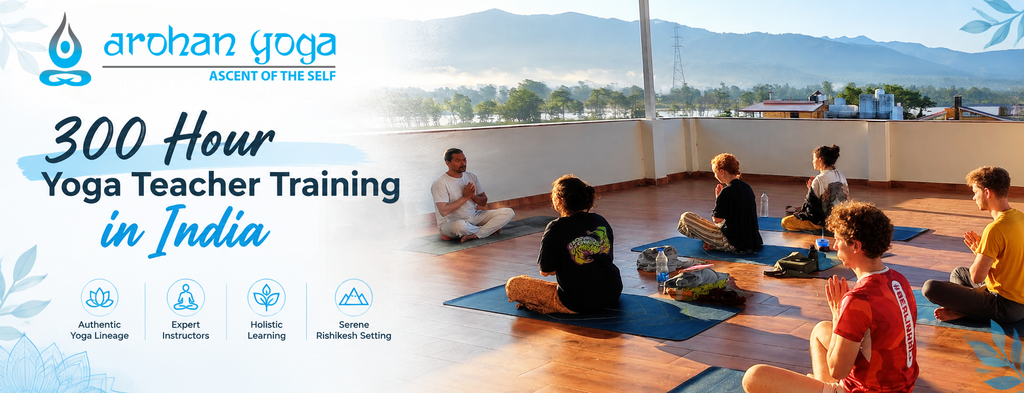
Adapting Advanced Yoga Knowledge to Different Students
Every student arrives with different physical abilities, experience levels, learning preferences, and goals. A skilled teacher therefore needs more than knowledge of advanced postures; they need the ability to adapt that knowledge.
A well-rounded 300 hour yoga teacher training in India can introduce students to modifications, alignment principles, contraindications, sequencing strategies, and teaching approaches that support varied classroom needs. This can be especially useful for teachers who want to move beyond teaching a single standard sequence.
- Different experience levels: Beginners, intermediate practitioners, and experienced students may require different instructions and variations.
- Individual modifications: Props, altered positions, reduced intensity, or alternative movements can make practices more accessible.
- Alignment awareness: Teachers can learn to observe foundational alignment rather than simply asking every student to imitate an identical shape.
- Specialised sequencing: Advanced training can help teachers design classes around particular styles, themes, movement goals, or student requirements.
- Mindful progression: Challenging practices can be introduced progressively instead of expecting students to immediately perform advanced techniques.
- Student-centred teaching: Understanding the person behind the posture can help teachers create more responsive and meaningful classes.
This ability to adapt connects advanced knowledge with real teaching situations and prepares practitioners for the responsibilities that come with guiding others.
Creating a Sustainable Path Beyond Advanced Training
Completing an advanced programme can be viewed not as an endpoint but as a transition into continued learning. Yoga teaching develops through practice, observation, reflection, and repeated interaction with students.
A strong post-training approach can help graduates maintain the discipline developed during their course while continuing to refine their teaching identity.
- Maintain personal practice: Consistent self-practice can keep foundational skills active and create opportunities for continued exploration.
- Continue studying: Yoga philosophy, anatomy, meditation, sequencing, and specialised approaches can all be explored beyond formal training.
- Reflect on teaching: Reviewing classes can help identify what worked well and what could be communicated differently.
- Develop a teaching focus: Teachers may gradually discover whether they prefer Hatha, Ashtanga, Yin, aerial practices, anatomy-focused teaching, or another area.
- Build practical experience: Regular teaching can strengthen communication, observation, class management, and adaptation skills.
- Keep learning from others: Workshops, mentorship, peer observation, and further study can contribute to long-term professional development.
Ultimately, advanced yoga education can create a bridge between personal practice and responsible teaching. It can encourage practitioners to understand yoga not simply as a collection of physical postures, but as an integrated discipline involving movement, breath, awareness, philosophy, and practical application.
The End
A 300 hour yoga teacher training in Rishikesh can offer an immersive pathway for practitioners who want to deepen their knowledge and develop more sophisticated teaching abilities. Through advanced asanas, Hatha, Ashtanga Vinyasa, Yin, aerial practices, anatomy, Ayurveda, pranayama, meditation, philosophy, sequencing, alignment, and teaching practice, students can develop a broader and more confident approach to yoga education.
For learners seeking a structured environment to advance their practice and teaching journey, Arohan Yoga offers a 300-hour programme designed around multiple yoga traditions and comprehensive teacher development. Explore the 300-hour yoga teacher training programme with us and take the next step in your teaching journey.
FAQs
300 hour yoga teacher training can be suitable for practitioners who already have foundational yoga teacher training and want to deepen their practice, theoretical knowledge, and teaching skills.
300 hour yoga teacher training can cover advanced asanas, anatomy, yoga philosophy, pranayama, meditation, sequencing, alignment, teaching methodology, Ayurveda, and multiple yoga styles.
Advanced training generally explores subjects in greater depth, including complex postures, specialised sequencing, detailed anatomy, advanced breathing practices, adjustments, and teaching adaptations.
Yes. Teaching practice, sequencing, demonstrations, verbal instructions, observation, adjustments, modifications, and injury-prevention principles can help develop greater teaching confidence.
India provides an opportunity to study yoga within a traditional cultural setting while participating in structured learning that combines practical practice with philosophy and related disciplines.