
Aerial Yoga in India: How It Works and Who Can Practice It
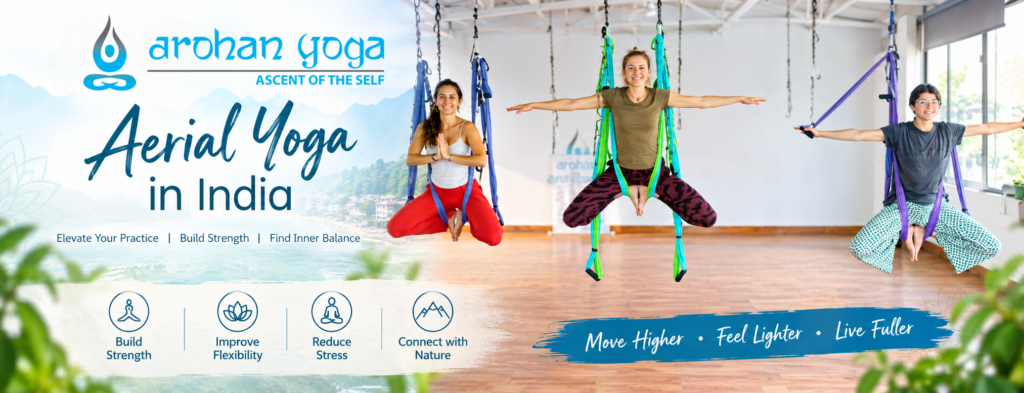
Aerial yoga in India is an increasingly popular form of yoga that combines traditional yoga postures with the support of a suspended fabric hammock. The practice allows participants to perform familiar movements with additional support while also exploring gentle inversions, stretching, balance and strength-building exercises. Unlike conventional yoga performed entirely on a mat, aerial yoga introduces an element of suspension, making the practice both physically engaging and different from traditional approaches. It can be adapted for people with different levels of experience when practised under proper guidance.
What Is Aerial Yoga?
Aerial yoga is a practice in which a strong fabric hammock or aerial silk is suspended from a secure point above the ground. The practitioner uses this hammock to support portions of the body while performing yoga-inspired movements and postures.
The hammock can provide stability during certain poses and may also allow practitioners to explore movements that can be difficult to perform comfortably on the floor. Depending on the exercise, the fabric may support the hips, back, legs or upper body.
Although aerial yoga incorporates elements of traditional yoga, it may also include movements influenced by Pilates, gymnastics, calisthenics and therapeutic exercise. It is therefore better understood as a complementary practice rather than a replacement for conventional yoga.
How Does Aerial Yoga Work?
The basic principle behind aerial yoga is the use of suspension and body weight. The hammock takes some of the body’s weight, allowing practitioners to move in ways that may feel different from floor-based yoga.
For example, a supported forward fold can be performed with the hammock helping to hold the body. Similarly, certain stretching movements can be explored with reduced pressure on the joints. The practitioner can gradually learn how to shift weight, maintain balance and use the fabric correctly.
Inversions are another important aspect of the practice. With appropriate instruction, the hammock can provide support while the practitioner learns inverted positions. This can make certain inversions more accessible, although they still require careful preparation and awareness of body alignment.
Aerial yoga in India is practised in different ways depending on the instructor, school and level of the programme. Some sessions focus mainly on gentle stretching and relaxation, while others involve strength, balance and more dynamic movements.
What Happens During an Aerial Yoga Session?
A typical session generally begins with a warm-up. The warm-up prepares the muscles and joints and allows practitioners to become comfortable with the hammock.
The next part may involve basic movements such as supported squats, stretches, balancing exercises and gentle strengthening postures. Beginners usually spend time learning how to sit, stand, lean and move safely while using the fabric.
As the session progresses, practitioners may work on more challenging movements. These could include supported backbends, core exercises, deeper stretches and selected inversions. The difficulty is generally increased gradually rather than immediately.
A session may finish with slower movements, relaxation or restorative exercises. The exact structure can vary considerably, so participants should follow the instructions provided by a qualified teacher.
Benefits of Aerial Yoga
Aerial yoga can offer several physical and mental benefits when practised correctly. One of its key advantages is assisted stretching. The hammock can provide support that allows a practitioner to explore a stretch while maintaining greater control over body positioning.
The practice can also help develop balance and body awareness. Since the hammock moves with the practitioner, maintaining stability requires concentration and controlled movement. Regular practice may therefore improve coordination and awareness of how the body moves through space.
Aerial yoga in India also attracts practitioners interested in improving flexibility and developing functional strength. Certain movements require engagement of the abdominal muscles, shoulders, arms and legs. The level of muscular effort depends on the posture and the style of practice.
Another potential benefit is the opportunity to explore spinal extension and supported traction. Some practitioners find suspended movements comfortable and relaxing. However, aerial yoga should not be considered a medical treatment for back pain or injuries. Anyone with a medical condition should seek appropriate professional advice before beginning.
Who Can Practise Aerial Yoga?
One of the notable features of aerial yoga is that it can be modified for different experience levels. Beginners can start with basic supported movements and learn how to handle the hammock before attempting advanced techniques.
People who already practise traditional yoga may also find aerial yoga useful as a complementary activity. The hammock can introduce new ways of approaching balance, stretching and inversions.
Aerial yoga in India is also suitable for people who are simply looking for a new form of physical activity. However, suitability depends on individual health, fitness and experience. Age, previous injuries, pregnancy and certain medical conditions may affect whether particular movements are appropriate.
People with conditions affecting balance, blood pressure, the spine, joints or other parts of the body should consult a qualified healthcare professional before participating. A teacher should also be informed about relevant physical limitations before the session begins.
Importance of Safety
Safety is particularly important because aerial yoga involves equipment that supports body weight above the ground. The hammock, suspension points and related equipment should be properly installed, inspected and maintained.
Participants should never attempt advanced aerial movements without learning the necessary foundations. Basic instructions regarding mounting, dismounting, weight distribution and body alignment should be understood first.
Clothing also matters. Comfortable, close-fitting exercise clothing can make movement easier and reduce the risk of clothing getting caught in the fabric. Jewellery and accessories that could damage the hammock or cause discomfort are generally best avoided.
The practice area should have adequate space around the hammock. Beginners should also avoid attempting movements independently after watching videos online, particularly when those movements involve inversions or significant height.
Learning Aerial Yoga as a Teacher
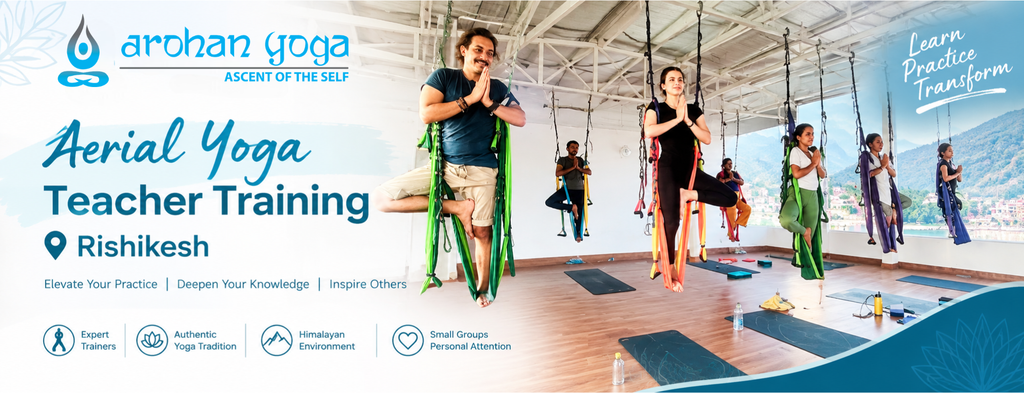
People who wish to move beyond personal practice may consider an aerial yoga teacher training programme. Such training can introduce participants to teaching methodology, safety principles, alignment, sequencing and practical instruction.
A structured programme may cover basic and advanced postures, warm-up techniques, strengthening exercises, stretching methods and approaches to creating a balanced aerial session. Anatomy can also form an important part of teacher education, helping practitioners understand how different movements affect the body.
Teaching practice is particularly valuable because knowing how to perform a posture does not necessarily mean knowing how to teach it. A teacher needs to explain movements clearly, observe students and provide suitable modifications.
Why Rishikesh Is Associated With Aerial Yoga Training
Rishikesh is widely recognised as an important destination for yoga education and practice. Its long association with yoga attracts students from India and other countries who want to study different styles in a traditional yoga environment.
For those specifically interested in aerial yoga teacher training can provide an opportunity to combine specialised aerial practice with exposure to broader yogic traditions. Training programmes may vary in duration, structure, teaching style and certification, so students should examine the curriculum carefully before enrolling.
It is useful to check whether a programme includes practical teaching sessions, anatomy, safety procedures, assessment and sufficient hands-on practice. Prospective students should also understand what the certificate represents and whether it meets their intended professional requirements.
What to Look for in a Training Programme
Anyone considering an aerial yoga certification course in India should look beyond the course duration and advertised number of postures. A well-structured programme should place appropriate emphasis on safety and responsible teaching.
Important areas to consider include the qualifications and experience of instructors, the condition of aerial equipment, the student-to-teacher ratio and the amount of practical training provided. A programme that includes supervised teaching practice can be particularly useful for those intending to teach after completion.
Students should also understand the certification process. Requirements may include attendance, practical assessment, written examinations or teaching demonstrations. Certification standards can differ between organisations, so it is sensible to verify the exact recognition and scope of a certificate before making a decision.
Aerial Yoga for Beginners
Beginners do not need to master difficult poses immediately. The first priority should be learning how the hammock works and becoming comfortable with basic movements.
Simple exercises can help develop confidence and familiarity with suspension. Over time, practitioners may progress towards more demanding postures as their strength, flexibility, balance and technique improve.
Patience is important. Aerial yoga can look effortless when performed by an experienced practitioner, but many movements require considerable control and preparation. Progress should therefore be based on individual ability rather than comparison with others.
Is Aerial Yoga the Same as Traditional Yoga?
Aerial yoga shares several principles with traditional yoga, including awareness of movement, breathing, balance and mindful practice. However, the use of a suspended hammock changes the physical experience considerably.
Traditional yoga generally relies on the floor as the primary source of support, whereas aerial practice introduces suspension. This can alter the way weight is distributed and allow practitioners to explore movements from different positions.
Therefore,aerial yoga in India should not be viewed as a replacement for traditional yoga. Instead, it can be considered another approach that complements a wider yoga practice.
Take Your Aerial Yoga Journey Further with Arohan Yoga
At Arohan Yoga, our aerial yoga teacher training in Rishikesh helps you deepen your practice and develop confident teaching skills. Our 50-hour programme covers around 70 postures, safety, alignment, anatomy, sequencing and practical teaching. With experienced teachers, daily aerial sessions, comfortable accommodation, vegetarian meals and a peaceful location near the Ganga, we support your learning journey.
Conclusion
Aerial yoga offers an interesting combination of yoga-inspired movements, suspension, stretching, balance and strength work. With proper equipment, qualified guidance and gradual progression, it can be adapted for beginners as well as experienced practitioners. Aerial yoga in India continues to attract people who want to explore a different dimension of movement and yoga practice. Whether the goal is personal development, improved physical awareness or learning to teach others, understanding the fundamentals and prioritising safety can help make the experience more effective and enjoyable.
Frequently Asked Questions
Aerial yoga uses a suspended hammock to support the body during yoga-inspired movements, stretches, balances and inversions.
Yes, beginners can start with basic movements and gradually progress under proper guidance.
It may support flexibility, balance, body awareness, strength and assisted stretching.
No. It incorporates traditional yoga principles while using a suspended hammock for additional support and movement.
It can be practised safely with properly installed equipment, suitable instruction and gradual progression.
Training may cover postures, safety, alignment, anatomy, sequencing and practical teaching techniques.
Rishikesh is well known for yoga education and offers opportunities to study aerial yoga alongside broader yogic traditions.